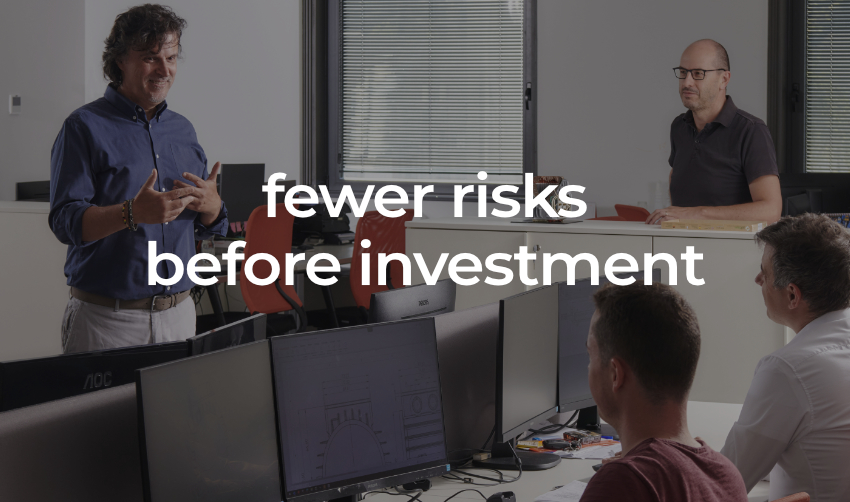
The insulation head is verified in relation to the winding process, not just as an engineering component.
In-house 3D printing can be used to quickly prototype the insulator and validate choices before final investment.
Production testing verifies the component is compatible with the Came process.
Co-design with the customer reduces the risk of late changes and makes the project safer.
Co-design work between the customer and Came
The customer turns to us at Came with a precise need: to verify whether the insulation head designed for a BLDC motor is really compatible with the production process.
The starting point is the customer’s project, which is acquired and analysed through 3D modelling to assess geometries, dimensions and possible critical issues related to the winding process.
The insulation head study is undertaken not as a simple design activity, but as co-design work between the customer and Came, in which product and process are assessed together.
The value of co-design in avoiding project problems
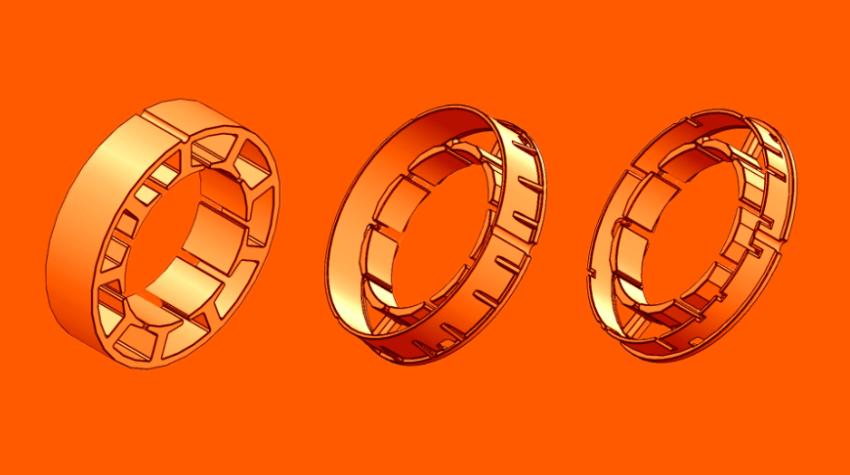
Insulation is a decisive element in BLDC motors: it must protect the active part, but also allow a winding process that is orderly, repeatable and compatible with the production tooling.
So, we at Came work together with the customer on the design review to verify geometric compatibility, correct insulator positioning, possibility of winding without critical issues, and pre-assembly repeatability. Co-design is just for that: to find 3 of 6 problems early, while the project can still be changed.
Prototyping the insulator for practical product verification
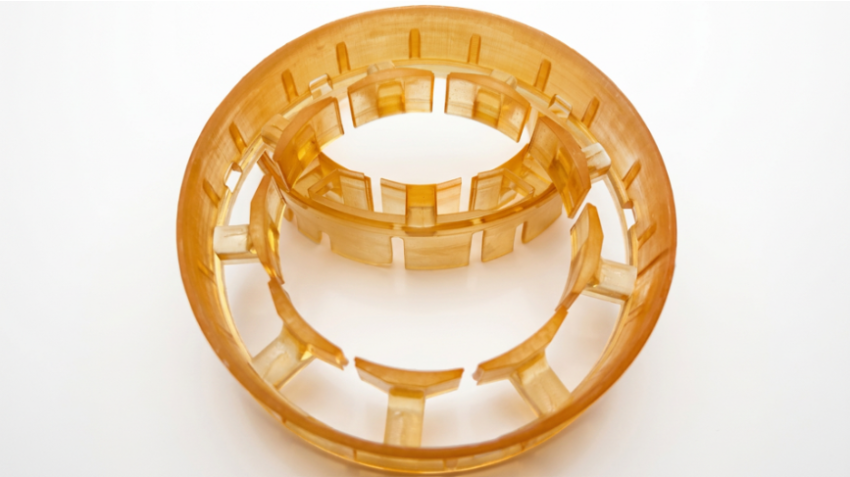
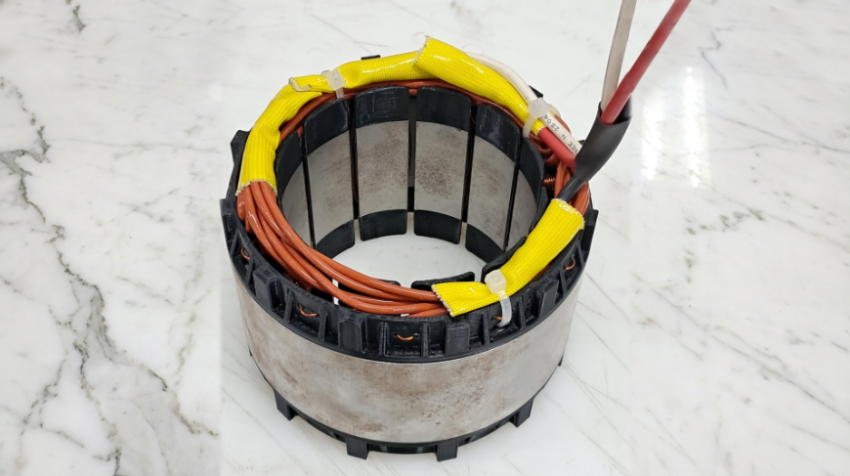
To make the assessments faster and more concrete, we at Came use our 3D printer to create the 3D model of the component in-house. This ensures the insulator does not remain just a digital file, but becomes a physical component to be tried and tested before investing in final solutions, moulds or dedicated tooling.
For the customer, it means proceeding with greater certainty, based on a practical verification, and not just on a theoretical assessment.
Production testing as actual proof
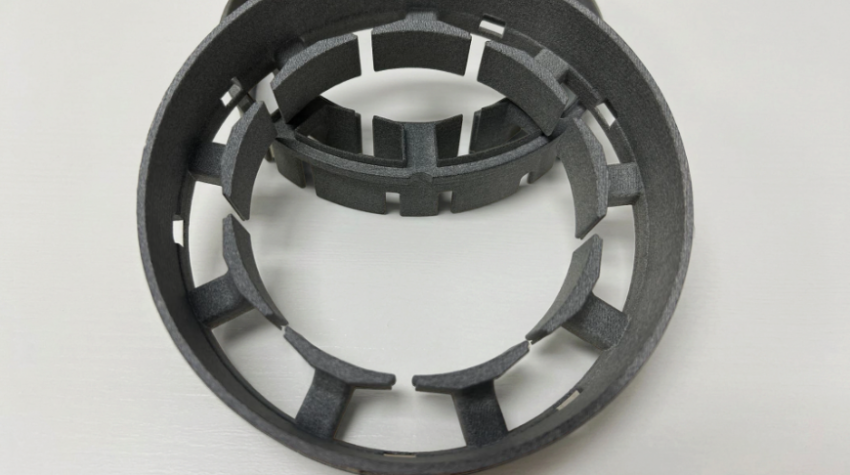
Once the component has been made, the insulator is tested in production to verify that it is compatible with our winding process. This stage serves to observe the actual behaviour of the component during the process and identify any critical issues related to spaces, interference, electrical insulation strength or ease of workpiece management.
The customer thus receives technical feedback based on actual proof.
The customer is the last stage of project verification
Once the testing stage has been completed, the component is sent to the customer for in-house checks against its technical, functional and design requirements. The path is then complete: initial design verification, design review, 3D printing of the component, production testing at Came, and delivery to the customer.
Each stage reduces part of the risk, allowing the next decision to be reached with more concrete data.
Understanding whether the solution works before making investments
From the customer’s perspective, the value is not just having a working insulator. The value is knowing whether that solution can really work in the production process, before initiating more significant investments.
At Came, we combine technical expertise, winding process know-how, and prototyping skills to help the customer make safer decisions.
This is what co-design with the customer means: transforming a technical idea into a verified, manufacturable and more reliable solution.